Posts

A Better Path Forward For Russian Space Launch -- Part 1: A Retrospective
Image
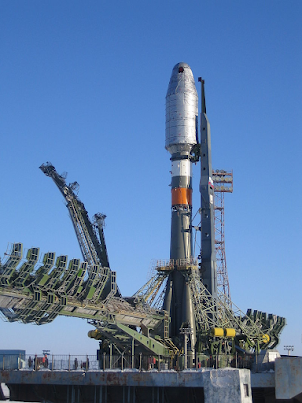
The storied Soyuz and the venerable Proton... For about six decades, they have been the mainstay of Soviet and Russian space launch. Together they have flown over 2000 times and supported almost every significant Soviet & Russian space mission from the beginning, including the entirety of their human spaceflight programs, if we count Soyuz's R-7 family predecessors. They have been prolific, effective, and affordable. And yet for at least four decades, their replacements have been, with starts and stops, under development. They are, after all, quite long in the tooth. But how do you successfully replace such effective launch vehicles? Zenit 3F    Credit: Roskosmos The Zenit rocket family, which was intended to eventually replace both, first flew in 1985. It was sized between the smaller Soyuz and the larger Proton. It used more efficient engines than both and mostly non-toxic propellants, unlike Proton. But after the dissolution of the Soviet Union, it remained in Ukraine, ...
Why Starlink Matters for Spaceflight -- Updated

  Why Starlink Matters for Spaceflight Originally published on weekly-spaceflight.webnode.com in June 2021. Updates in white. There has been a lot of talk about Starlink, SpaceX's work-in-progress satellite megaconstellation. Will it provide a valuable and much needed service to millions without access, or is it just for gamers in Alaska? Is it a scourge to astronomy or is SpaceX doing a good job minimizing the impact? Is it a danger to spaceflight or are the Kessler Syndrome fears overblown, not taking into account the effectiveness of active collision avoidance and the self-cleaning nature of low orbits? Is it driven purely by profit or are they really going to try to finance Mars missions with this? Will it be profitable or is it a scam? Have Starlink launches gotten boring or is every launch exciting? And will SpaceX go bankrupt trying to do build it? Amidst all that debate, it's easy to miss arguably the biggest impact of Starlink on spaceflight: its full frontal assault ...

Whatever happened to single launch crewed Moon missions?

This post is about pitching a bit of alternative history -- a wistful what-could-have-been. But to do that, I need to give a bit of background. A Bit of History Most people know something about the Apollo program, with the massive Saturn Vs that sent a capsule and a lander to the Moon to land two guys with every launch. And some know about the limitations and idiosyncrasies and heritage of Artemis, the modern-day crewed lunar program of the US and international partners. But not all do, so I'll provide a bit of background. Artemis is the programmatic descendant of Constellation, an abandoned Bush II era program that was described by its chief proponent, then NASA Administrator Michael Griffin, as "Apollo on Steroids". A bigger capsule and a bigger lander, launched on a bigger rocket would take 4 astronauts, rather than 2, to the lunar surface for longer stays in greater safety and comfort. It turned out to be too difficult to develop a human-rated rocket powerful enough t...

Will Starship Landings Ever Be Safe Enough? -- Part 1: Engine Reliability

Image
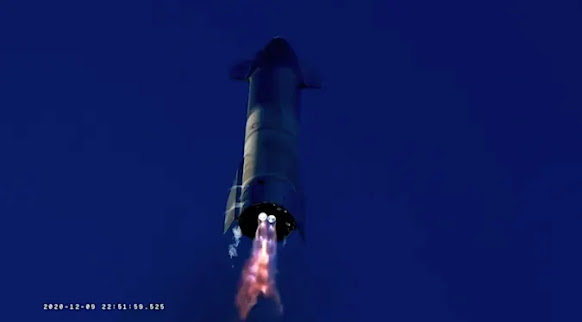
SpaceX's  Starship  promises to revolutionize spaceflight, but its planned future missions and capabilities have drawn a lot of skepticism. Much of the skepticism surrounds Starship's goal of launching large numbers of people to space -- without any launch escape system, and landing them back on Earth or on Mars using not wings, not parachutes, but rocket propulsion. SN8 landing attempt. Source: SpaceX Anecdotally, it seems that the most common criticism is "Starship will never be say enough for large scale human transport", and the most commonly touted risk factor is the reliance on rocket engines for landing. If you have an engine failure, it is said, you will crash into the ground with no chance of survivability, and rocket engines have never been close to reliable enough for depending on them for routine transport without some kind of backup system for safely recovering the passengers in the event of a failure. Those familiar with the Starship system will know tha...